Protein needs for older adults
Protein isn’t just in your muscles, it’s in every cell in your body.
It plays a role in your:
immune system
hormone production
appetite regulation
structure of your skin, bones, hair, and nails
Protein isn’t just for gym enthusiasts sculpting their biceps and glutes. It plays a role in nearly every functionin your body.
That said, maintaining muscle strength is key to living longer, staying mobile, and preventing frailty.
Why protein is important for ageing and muscle health
Protein is an essential part of the bone and muscle matrix. You’ve heard of collagen, right? It’s not just needed for smooth skin.
Collagen is the main structural protein in bone, working alongside minerals like calcium and phosphorus to provide strength and flexibility.
To give you an idea, roughly 20-30% of bone mass is protein, and muscle tissue is approximately 15-20% protein by weight.
When we don’t get enough protein, it can contribute to muscle loss, sarcopenia (age-related muscle loss), and reduced bone strength. For those living with arthritis, weak muscles can add strain to joints, leading to more pain and reduced function.
That’s why strength training and regular movement are also critical for maintaining bone density and muscle strength.
What protein does in the body
Protein is one of the three macronutrients we consume for energy, alongside carbohydrate and fat. Different foods contain varying amounts and types of protein.
When you eat protein, it is broken down into amino acids during digestion and absorbed into the bloodstream. Once absorbed, those amino acids are reassembled into the specific proteins your body needs at the time, including hormones, enzymes, structural proteins, and transport proteins.
Why protein needs change as we age
Many things in life get better as we age. Unfortunately, muscle responsiveness to protein does not.
Older adults experience what is known as anabolic resistance, meaning muscle protein synthesis becomes less responsive to dietary protein. As a result, higher protein intakes, along with resistance exercise, are often needed to maintain muscle mass and strength.
General recommendations suggest around 0.8g per kilogram of body weight per day for adults. However, adults over 50 may benefit from increasing this to around 1.0 to 1.2g per kilogram, and in some cases up to 1.5g per kilogram depending on health status and activity levels.
Why spreading protein across the day matters
It’s not just how much protein you eat, but how you spread it across the day.
Your body can only effectively use a moderate amount of protein at one time to support muscle repair and maintenance. This means that having most of your protein at dinner, and very little at breakfast and lunch, is not the most effective way to support muscle health.
As a general guide, aiming for a consistent intake of protein across meals can help maximise muscle protein synthesis throughout the day. For many people, this might look like including a source of protein at breakfast, lunch, and dinner, rather than relying on one main meal.
This becomes increasingly important with age, when the body requires a stronger signal to maintain muscle.
How to get enough protein in your diet
Protein recommendations are often given in grams, but this can be difficult to translate into everyday meals.
As a rough guide, a serve of protein at a meal might include:
2 eggs
Small tin of tuna
1/2 cup low fat yoghurt
Small portion of fish, chicken, or lean meat
Legumes/beans and grains
Many people meet their total protein needs across the day, but when you look closer, intake is often heavily weighted toward dinner. Breakfast, in particular, is commonly low in protein.
Rather than focusing only on daily totals, it can be helpful to look at each meal and ask:
Is there a meaningful source of protein here?
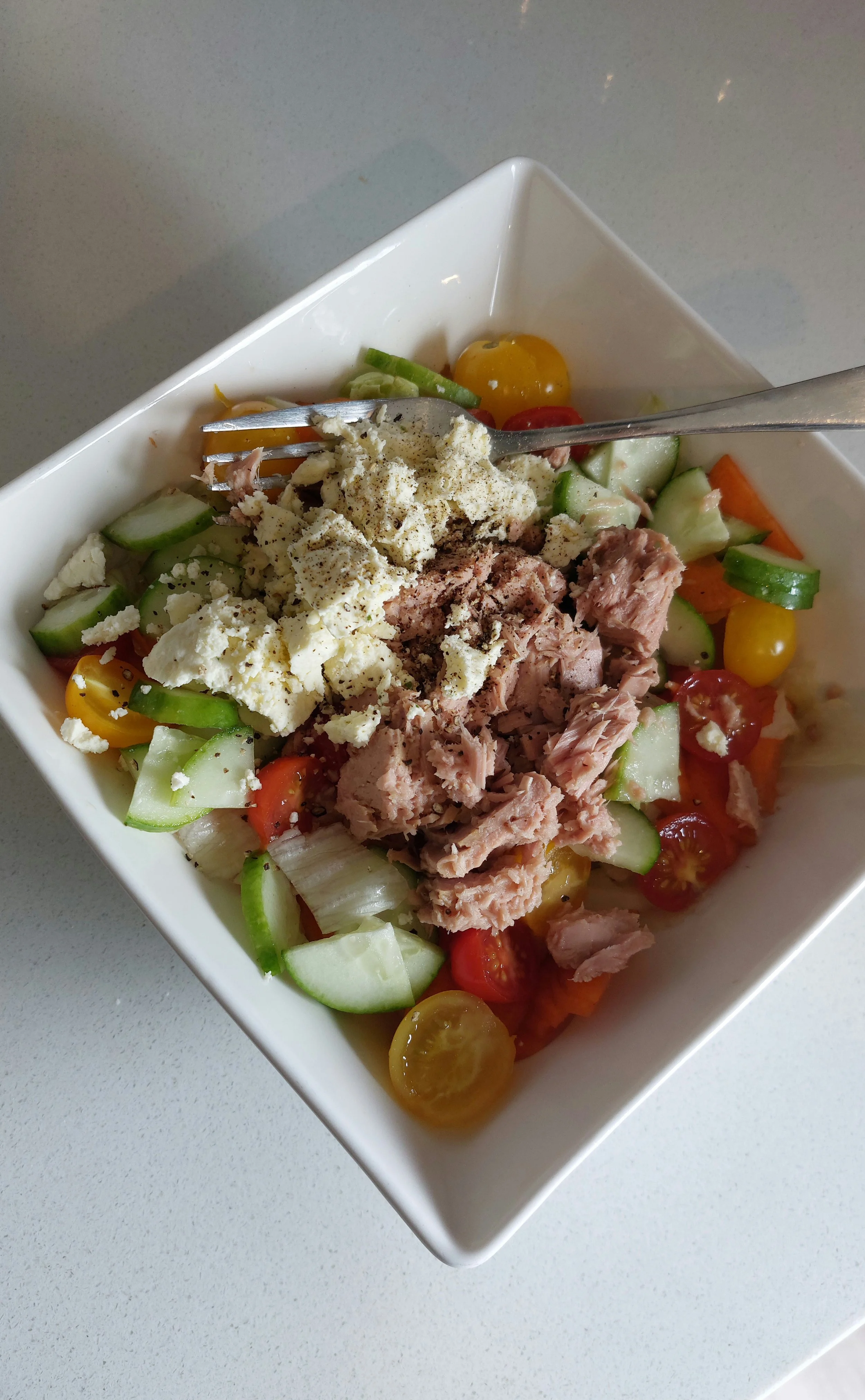
How to increase protein intake
Looking at ways to increase protein at breakfast time and post-exercise can be an important factor in maintaining muscle mass, reducing frailty risk, and supporting long-term mobility.
Since total energy needs often decrease later in life, it can be helpful to prioritise nutrient-dense foods. For example, you might swap a lower-protein breakfast option for one that includes eggs, yoghurt, or beans.
Protein also helps you feel full, which can support weight management.
Is it OK to supplement with protein powder?
While most people can meet their protein needs through whole foods, there are times when this can be challenging, particularly at breakfast when intake tends to be lowest.
In these situations, a protein powder can be a practical way to help fill the gap. Adding a scoop to yoghurt, smoothies, or oats can increase protein intake without needing to significantly change portion sizes or meal structure.
Options like Nothing Naughty (my fave) protein powders can be useful for convenience, particularly for those with lower appetites, higher protein needs, or limited time in the morning.
That said, protein powders are a supplement to your diet, not a replacement for whole foods. Whole food sources provide additional nutrients like vitamins, minerals, and fibre - better variety.
Choosing heart-healthy protein sources
While the amount and timing of protein matters, the type of protein you choose is also important.
Focusing on a variety of minimally processed protein-rich foods such as legumes, nuts and seeds, fish and seafood, eggs, poultry, and lean red meat can support both muscle and cardiovascular health.
Oily fish like salmon, sardines, and mackerel provide omega-3 fats that support heart health, while processed meats such as sausages and bacon are best limited due to their high salt and saturated fat content.
Choosing mostly whole food protein sources helps support overall health, not just muscle.
Protein to age well
Protein plays a role in far more than just muscle. It supports how you move, how you recover, and how well you maintain your independence over time.
For many people, the biggest opportunity is not necessarily eating more protein overall, but improving how it is distributed across the day, particularly at breakfast.
Small, consistent changes to your meals can make a meaningful difference to your strength, mobility, and long-term health.
If you’re not sure whether your current meals are giving you enough protein at the right times, that’s exactly what I help people work through. Book a free 15-minute chat to run through some of your concerns, or check out my consultation page if you know you’re ready for support.
For more information check out these links
How to choose heart healthy protein foods - https://www.heartfoundation.org.nz/about-us/news/blogs/how-to-choose-heart-healthy-protein-foods
Do older people need more protein in their diet - https://www.eldernet.co.nz/knowledge-lab/health-wellbeing/health-wellbeing/do-older-people-need-more-protein-in-their-diet
Protein consumption and the elderly: What is the optimal level of intake - https://pmc.ncbi.nlm.nih.gov/articles/PMC4924200/