The recommended fibre intake - Good to know. A straight forward message that reaches the masses. But it’s worth thinking about fibre variety too. Because different plant foods provide different types of fibre in different quantities.
I actually haven’t considered if I get 25g of fibre per day. I can assume that I do given my preference to think about getting many different plant sources into me each day, it just happens I guess.
I’ve leaned heavily towards soluble fibre in this blog, and haven’t gone into detail about insoluble fibre. Insoluble fibre is equally important, and getting it follows the same principles, however, I’m mostly going to talk about gut diversity within this blog.
Different fibre does different jobs
There isn't just one type of fiber with one chemical makeup, there is a whole range and each one is built differently.
This is important because your gut bacteria aren’t all the same either, they need different things.
Some bacteria can break down one type of fiber, but another species can’t, and instead needs a different type.
Certain species can help to partially break down fibre variants, making smaller compounds that are more accessible for other bacteria.
Some fibres are chemically complex and can only be broken down by a narrower range of bacteria. Other, simpler fibres can be used by a much wider range of species.
So basically I’m saying that some bacteria are a little bit fussy about what they eat, but they still need to eat.
And this is the message I most want to share: If you were eating the same few sources of fibre day after day, you’d be repeatedly providing food for the same bacteria that can use those particular fibres.
But what about the bacteria that need something different?
If the particular fibres they rely on aren't making it onto your plate, they aren't getting the nourishment they need. And over time, the bacteria that are better fed can start to dominate, while other populations could be crowded out and die off.
This doesn't mean you need to cut down eating your favourite high-fibre foods.
It just means that you should think about adding in another few kinds that you don’t eat as often. Add a bit of variety.
Oats are a great source of fibre, but do they have it all?
I’ll use oats as an example but this can be applied to any fibre food source. Carrots, rice, banana...
Oats are a great source of fibre, and for most people there is absolutely nothing wrong with eating them most days.
But oats contain particular types of fibre. They probably aren't providing EVERY type of fibre your gut bacteria need.
If you have oats for breakfast every morning, that's totally cool, just give thought to the other sources of fibre you’re also adding in each day.
Forget about counting grams, and start counting variety
I’m definitely not saying that the recommended fibre intake of 30g for adult males, and 25g for adult females doesn’t matter. It does.
But I think a better way to think about it is: How many different plant foods am I eating?
Not how many grams, not how many portions. But how much variety is actually on your plate?
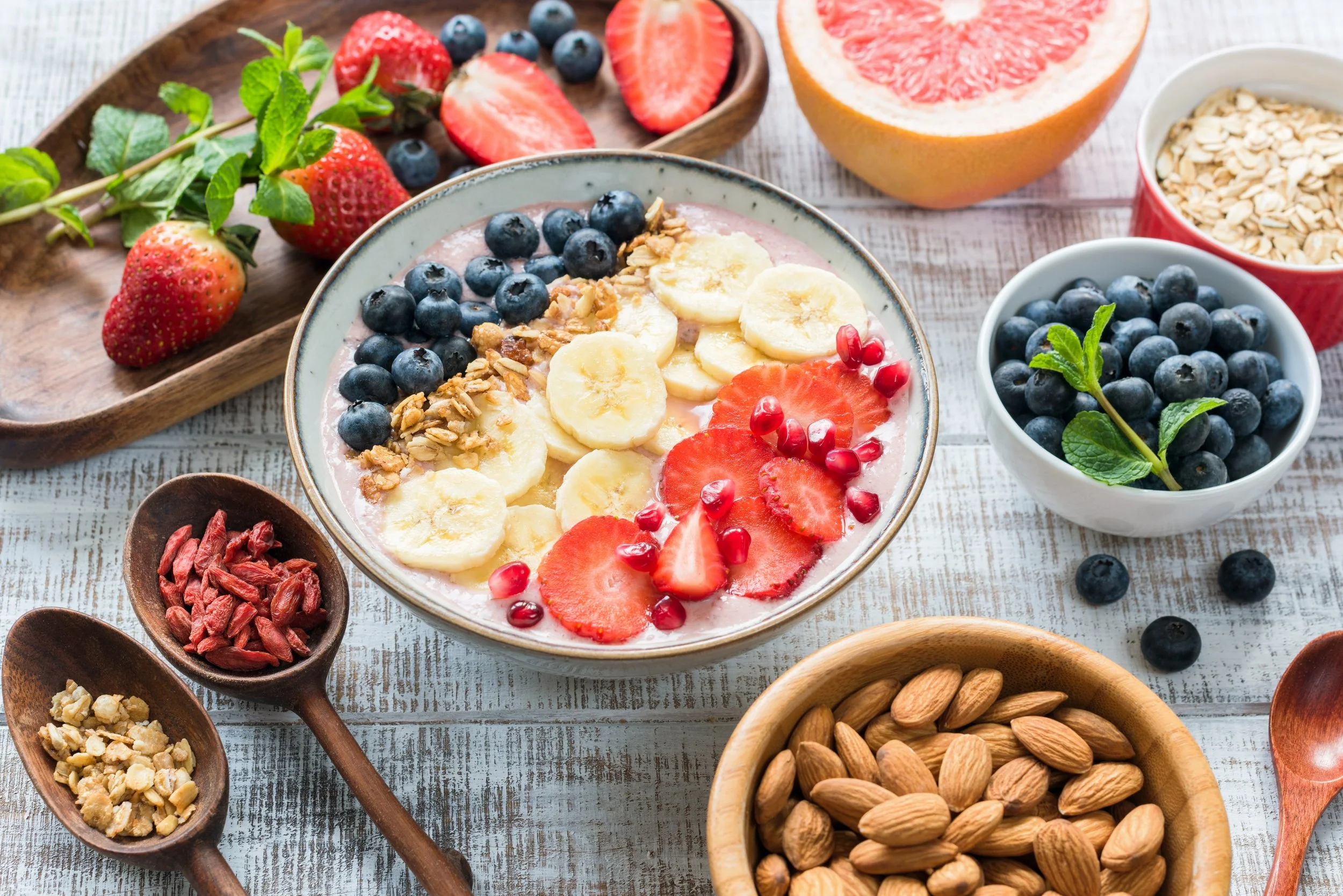
Nuts, seeds, fruit, vegetables, legumes and wholegrains all bring something different to the table.
And increasing that variety doesn't have to mean completely changing the way you eat.
Some tips to get more fibre onto your plate:
Add seeds into your salad. A small sprinkle of sunflower, pumpkin, sesame, chia or hemp seeds brings in a different source of fibre alongside the lettuce and other vegetables already in the bowl.
Add beans to a mince meal. Try replacing some of the beef mince with a four or five-bean mix. Legumes are a great way to increase both fibre and variety, and most people could probably eat more of them.
Put some fruit and/or vegetables on the cheeseboard. Grapes, apple slices and celery alongside the crackers and cheese is an easy way to sneak in more plants.
Choose multigrain over plain white where you can. Or rotate between different grains rather than defaulting to the same one every time, brown rice one day, quinoa another. Try different things instead of defaulting to the same loaf every week.
None of these require a big diet overhaul.
It's less “eat more fibre” and more “widen what's already on the plate.”
Because getting enough fibre isn't just about hitting a number.
You're feeding an ecosystem.
And that ecosystem has a lot of different mouths to feed.
If you're wondering whether your current diet is giving you enough fibre without missing out on the other important nutrients your body needs, you can book a free 15-minute chat with me.
For more information check out these links
Types of fibre - https://nutritionsource.hsph.harvard.edu/carbohydrates/fiber/
Dietary fibre and prebiotics and the gastrointestinal microbiota - https://pmc.ncbi.nlm.nih.gov/articles/PMC5390821/
Check your fibre - https://www.thegut.org.nz/check-your-fibre/
Fibre and fluid for health bowels - https://www.healthnz.govt.nz/health-topics/keeping-healthy/eating-well/fibre-fluid-healthy-bowels